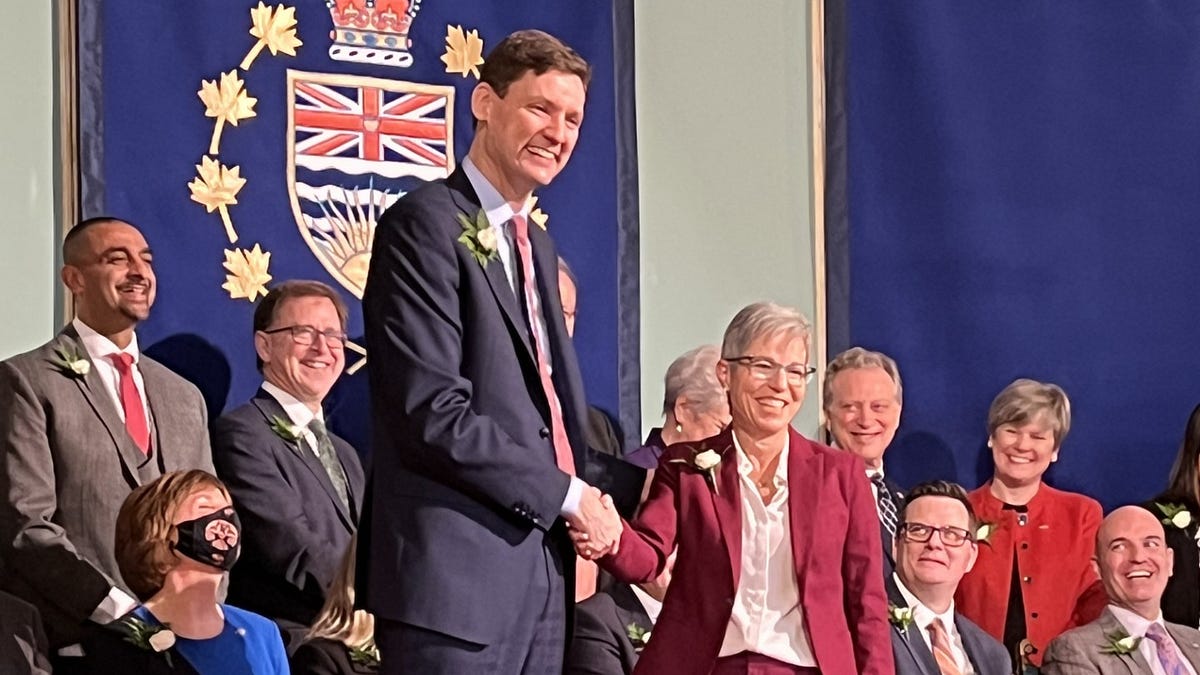
The Rise and Fall of David Eby
The recent downfall of the BCNDP has been a topic of much discussion, and one former member, Selina Robinson, has come forward with a personal account of the events leading up to this political demise. Robinson, who served as the Minister of Post-Secondary Education, shares her perspective on David Eby's leadership and the factors that contributed to the party's decline.
Robinson's narrative begins with her own experience as a cabinet member under Eby's leadership. She reveals that Eby's leadership style clashed with her own values and beliefs, leading to a strained relationship. Despite this, Robinson remained committed to her role, even after being reassigned from the Finance Ministry.
Early Signs of Hubris
Robinson recalls an incident from 2013, shortly after their election as MLAs, when Eby expressed his ambition to become the party leader. This early display of hubris, combined with his lack of humility, set the tone for their future interactions.
"I let him know that it was too early for me to endorse anyone, that I wanted to see who else might be interested in the leadership. Within weeks, David called to say he had changed his mind..."
A Political Animal
Robinson describes Eby as a political animal, driven by ambition and a desire for power. She highlights his lack of consistent values and tendency to make impulsive decisions, often at the expense of the party's long-term goals.
"While a smart man, he was not always the smartest, as the election result showed. He was not particularly grounded in a consistent set of values, made panicked, shoot from the hip decisions and was mostly interested in just beating up the opposition..."
A Lack of Teamwork
One of the most revealing anecdotes shared by Robinson involves Eby's behavior at the airport. While other MLAs engaged in friendly conversations, Eby stood apart, practicing Mandarin with earbuds in his ears. This behavior, according to Robinson, reflected his lack of interest in teamwork and his inability to connect with colleagues.
Character Assassination
Robinson also criticizes Eby's approach to opposition members, which she describes as character assassination. She argues that Eby's willingness to attack financial agents and volunteers, rather than focusing on policy debates, damaged the democratic process.
"Given the vitriol, the innuendo and the risk, why would anyone put their name forward to run for office? Why would anyone even volunteer to help out on a campaign? Attacking people in an attempt to discredit them, taint the candidate and sink the competition harms our democracy..."
The Election Call
The article delves into the reasons behind Eby's decision to call a snap election, which Robinson believes was motivated by self-preservation rather than a genuine desire for a mandate. She suggests that Eby's impatience and disrespect for local governments led to significant voter confusion and frustration.
"David has demonstrated that he doesn’t have much patience or respect for local governments. He overrode them on several pieces of legislation and chose to not heed their concerns of overlapping elections..."
The Campaign
Robinson describes the campaign as pathetic, lacking a clear vision and relying on fear-mongering about the Conservatives. She notes that Eby failed to acknowledge the accomplishments of the previous leader, John Horgan, and instead took credit for achievements that were not solely his.
"David Eby never presented a vision, something to believe in other than 'Please pick us because the other guys are worse'. And the list of accomplishments that he provided were almost all accomplishments that we achieved under John Horgan..."
The Apology
Even Eby's apology to his caucus, following the election defeat, was tainted by his hubris. He expressed no regrets and stated that he would make the same decision again, further alienating his colleagues.
"Even David’s apology to his decimated caucus earlier this week was full of his hubris as he topped up the apology for the outcome by noting that he had no regrets, that he’d made the right call and that he would do it again."
The Party's Responsibility
Robinson acknowledges that the BCNDP's downfall is not solely Eby's fault. She questions the silence of her ex-colleagues and the party executive, who she believes should have spoken up against Eby's leadership.
"I know that many of them have been unhappy with his leadership for sometime. I know that most of them didn’t want this election. Where were their voices?"
The article concludes with Robinson's hope for the party's future, emphasizing the need for kindness and humility in leadership. She believes that the BCNDP has a lot of deep work to do to regain the trust of British Columbians.
"I hope the party can sort itself out, identify a new leader, and rediscover kindness and humility. British Columbians deserve at least that much."

